.svg)
1116 & 1128 Dell Avenue, Campbell
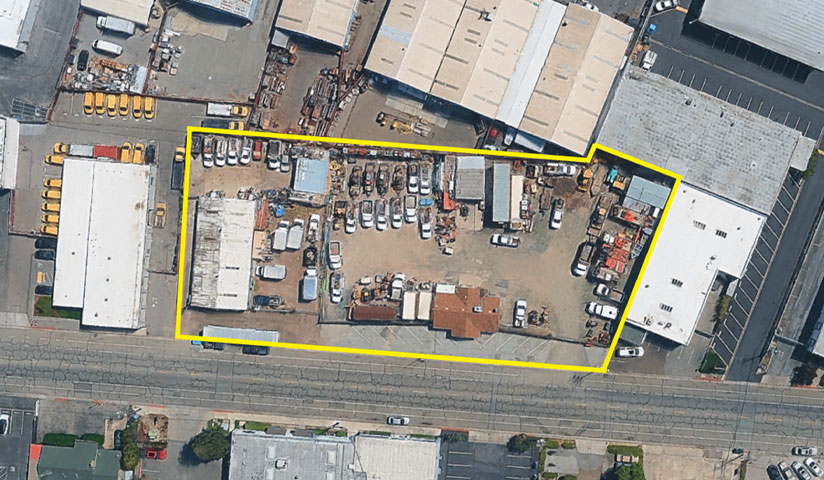
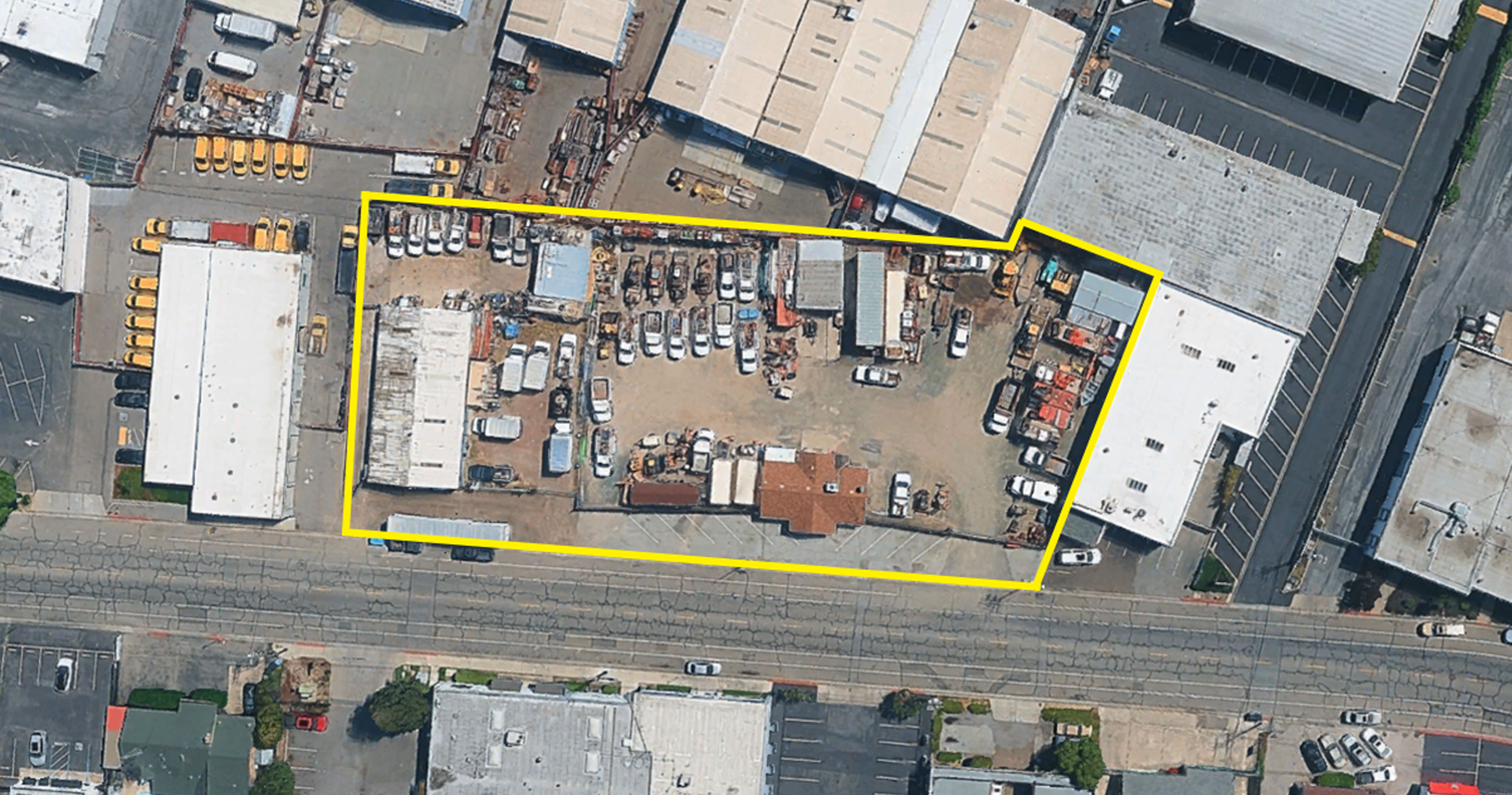
For eight years, DACO Construction operated from a construction yard and office property at 1116 and 1128 Dell Avenue in Campbell, California.
The property worked exceptionally well for the company. It's approximately 35,430 square feet across two parcels provided the outdoor yard and equipment storage DACO needed, while a 1,106-square-foot office building and 404-square-foot storage structure supported its day-to-day operations.
Like many long-term commercial tenants, DACO wanted something more: to own the property it had spent years operating from.
That opportunity is rarer than it might seem.
Property owners don't always approach existing tenants when they decide to sell. Yet, for an owner-user like DACO, the property could have significantly more strategic value than it would to another buyer. DACO was already established there. Its fleet, equipment, materials and operations fit the site. Purchasing it would eliminate the disruption and expense of relocating while giving the company long-term control over a property central to its business.
When the opportunity arose to acquire the property, Hanhan Commercial Group represented DACO and its owner, Jared, through a transaction that ultimately involved far more than negotiating a purchase price.
The challenge was to make sure DACO wasn't simply buying the property it wanted, it was buying it safely.
The Challenge
DACO ultimately acquired the property for $3,550,000, but the path to closing involved significant environmental, land-use and occupancy questions.
During the approximately six-month transaction, HCG coordinated a diligence strategy designed to answer those questions before DACO released its contingencies.
That distinction mattered. Keeping the contingencies in place protected DACO's earnest money while preserving the buyer's negotiating leverage with the seller as new information about the property emerged.
Two issues became particularly important: an undocumented underground gasoline storage tank and a potentially costly question surrounding the property's legal use.
Uncovering an Unregistered Underground Storage Tank
As part of the acquisition, HCG helped DACO engage an experienced environmental consultant to conduct a Phase I Environmental Site Assessment.
Historical documents indicated that three underground gasoline storage tanks may once have existed on the property.
Records confirmed that one tank had previously been properly removed, with documentation on file with the appropriate local agencies. The status of the other tanks, however, was less clear.
Among the historical materials was a rough sketch suggesting the location of additional underground tanks. Further investigation using detection equipment confirmed that another metal tank remained underground.
More concerning, there appeared to be no record of that tank having been registered with the appropriate agencies.
And when the tank was ultimately accessed, it still contained gasoline.
What could have become a significant environmental liability now required a carefully sequenced response.
A Diligence Strategy Designed to Save Time and Money
HCG worked with the environmental team to determine the most efficient way to investigate and resolve the issue.
Rather than immediately performing soil sampling and then potentially having to conduct another round of testing after the tank was removed, the team sequenced the work so the necessary environmental testing could be performed after removal.
First, soil above the tank was carefully excavated under the appropriate oversight to establish its location and dimensions without damaging it. The previously undocumented tank then had to be registered before its formal removal could proceed.
Once approvals and agency oversight were coordinated, the remaining gasoline was safely extracted and the underground tank was removed.
The environmental consultant could then perform Phase II soil sampling around and beneath the newly removed tank, as well as around the locations of the previously removed tanks.
This sequencing avoided potentially duplicative Phase II investigations, each of which could have added significant cost and weeks of additional time to the transaction.
Most importantly, the final Phase II results came back clean.
No remediation was required and no further environmental action was necessary.
Shifting Environmental Cost and Risk Away From the Buyer
Environmental diligence wasn't the only issue that could have jeopardized the acquisition.
Because DACO intended to continue using the property primarily as an outdoor construction yard and storage facility, confirming the legality of its operations was essential.
HCG engaged a local architect experienced with the City of Campbell to analyze DACO's operations against the property's zoning designation and applicable use requirements. During the feasibility period, the team also engaged City planners to confirm that DACO could safely continue operating after purchasing the property.
That process uncovered another problem.
City records indicated that the use could be considered nonconforming and that the existing 1,106-square-foot structure had originally been constructed as a residence.
If that interpretation stood, future changes to the property or its use could potentially trigger requirements to bring portions of the site up to current standards. Depending on what was required, that could have meant substantial improvements to the buildings, site, curbs, paving, access and other components of the property.
The potential cost could have reached hundreds of thousands of dollars, and potentially exceeded $1 million.
Then, buried deep within the roughly 900 pages of historical material included with the Phase I report, Jared discovered a critical document.
At approximately page 640 was an original permit showing that the structure the City believed had been built as a home had actually been permitted as an office.
HCG and the diligence team brought that historical documentation to the City's planning staff, establishing the paper trail necessary to demonstrate the property's historical use.
That discovery helped resolve the issue and gave DACO greater confidence that it could continue its operations without inheriting a potentially massive code-compliance problem.
Creating Additional Income While Preserving Room to Grow
At acquisition, DACO wasn't the property's only occupant.
A second tenant occupied part of the site under a relatively simple month-to-month arrangement.
HCG saw an opportunity to improve that situation rather than simply inherit it.
The team conducted a lease comparable analysis and worked with DACO to restructure the tenancy at market rent. A new short-term lease provided more reliable income and stronger landlord protections than the existing month-to-month agreement while preserving DACO's ability to eventually expand into the tenant's portion of the property.
That balance was intentional.
DACO received increased income and greater certainty in the near term without sacrificing control of the property over the longer term.
Eventually, that flexibility proved valuable. The other tenant vacated, and DACO expanded into the remaining area.
Today, DACO occupies 100% of the property.
The Result
After approximately six months of diligence and negotiation, DACO Construction closed on 1116 and 1128 Dell Avenue in November 2024 for $3.55 million.
The acquisition transformed a property DACO had leased for eight years into a long-term asset for the company.
Along the way, HCG helped DACO:
- Secure ownership of the property central to its operations.
- Maintain buyer contingencies and earnest-money protection while significant issues were investigated.
- Identify an undocumented underground gasoline storage tank.
- Coordinate a strategy for its registration, safe removal and environmental testing.
- Negotiate for the seller to pay the tank-removal and Phase II costs.
- Obtain clean Phase II results with no remediation or further action required.
- Structure seller financing that kept the seller involved following the acquisition and provided additional protection related to environmental risk.
- Resolve a potentially significant zoning and historical-use issue before contingency removal.
- Avoid exposure to improvements that could potentially have cost hundreds of thousands of dollars or more.
- Reposition an existing month-to-month tenancy at market rent with stronger landlord protections.
- Preserve the flexibility DACO needed to eventually expand into the entire property.
- Later transition from seller financing to conventional financing.
Today, DACO still owns and operates from the property and has expanded to become its sole occupant.
The approximately 35,430-square-foot site accommodates the company's fleet, trucks, equipment, materials, office functions and outdoor storage needs in a well-located Campbell industrial corridor.
What began as a long-term tenant's ambition to own itsplace of business ultimately became a successful owner-user acquisition, but only after the environmental, zoning, financing and tenancy risks were systematically addressed.
For DACO, the result wasn't simply the purchase of a commercial property. It was long-term control of a location already proven to work for the business, with the major known risks investigated and resolved before the company committed to closing.
Deal Notes